
SECURITY
NDLEA, Police Urge Abia Youths To Reject Drugs, Embrace Skills, Agribusiness

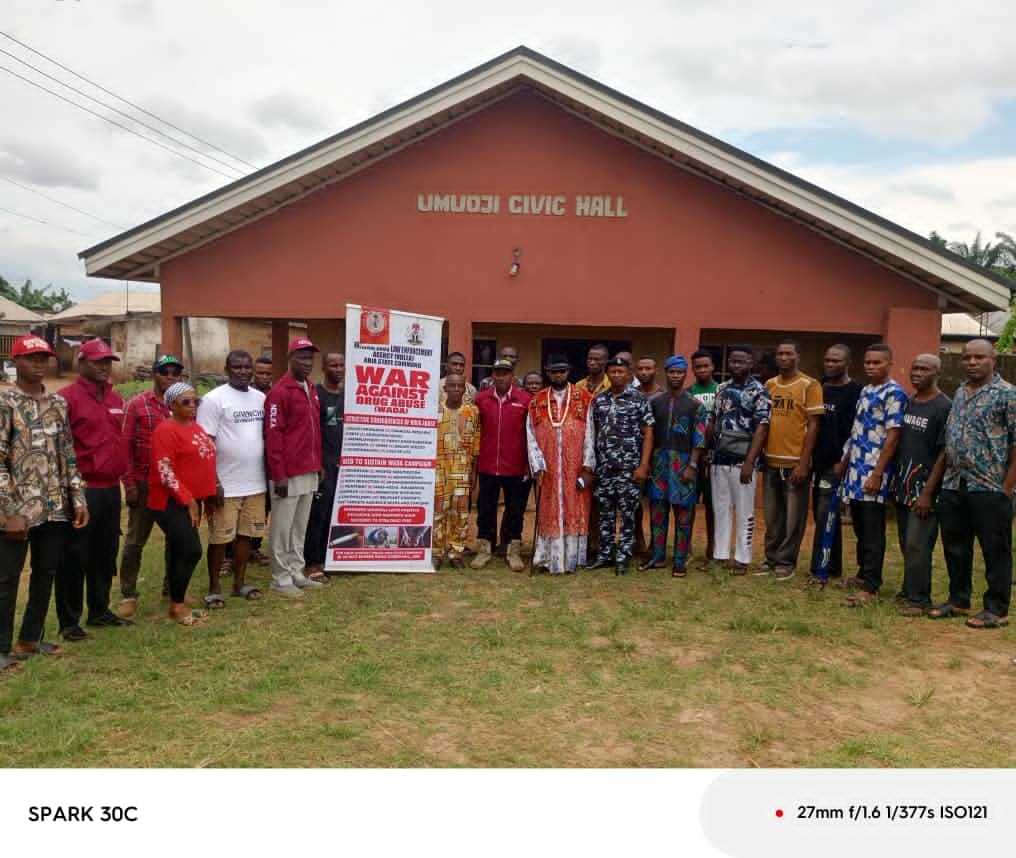
Agencies Warn Substance Abuse Threatens Education, Jobs, Security As FG Rolls Out Youth Empowerment Programmes
UMUAHIA, Abia State – The National Drug Law Enforcement Agency, NDLEA, and the Nigeria Police Force have intensified calls on young people in Abia State to reject illicit drug use and embrace skills acquisition, entrepreneurship and productive livelihoods, warning that substance abuse is fueling unemployment, crime and wasted opportunities.
The appeal was made on Friday during a youth development and drug awareness workshop organized for youths of Okwu Olokoro at Umuoji Civic Hall, Umuahia South Local Government Area.
Speaking at the programme, Assistant Commander of Narcotics, NDLEA Abia State Command, Frank Nwaohammuo, warned that illicit drug use undermines young people’s health, judgment, education, employment prospects and contribution to society.
Nwaohammuo urged youths to adopt a “no demand, no supply” approach by refusing to purchase illicit drugs, saying reduced demand would weaken the market for dealers.
“Each time you attempt to go into drugs, it is a permission to go into perpetual slavery in the hands of illicit drugs,” he told participants, cautioning against experimenting with substances that could lead to dependency.
He also drew attention to the growing use of drug-integrity testing for admission into schools and employment.
The NDLEA currently operates a Drug Integrity Test service for students, civil and public servants, and prospective employees. The agency has also announced a national policy on drug testing in tertiary institutions.
Nwaohammuo noted that NDLEA’s rehabilitation facilities in Aba were under pressure due to rising cases, and commended the Abia State Government under Governor Alex Otti for its intervention toward establishing a drug rehabilitation centre in the state.
He further linked substance abuse to public safety, urging residents to be cautious of drivers, riders and operators whose judgment may be impaired by drugs. He also called on parents to supervise their children closely, including making unannounced visits to those in tertiary institutions.
“Drug problem is everybody’s problem,” he said.
Also speaking, the Divisional Crime Officer, Ubakala Divisional Police Station, ASP Osinachi Ahana, urged youths to reject idleness, cultism, illicit drugs and the pursuit of quick wealth.
Ahana said police records showed Okwu Olokoro had recorded significant crime concerns, and blamed the desire for “fast money” for exposing young people to criminal networks.
He appealed to residents to see security agencies as partners and called for closer regulation of scrap dealers and scavengers to prevent stolen property from entering the market.
Representing the Commissioner for Sports and Youth Development, Hon. Ananaba Nwaobilor, the Director of Youth Development, Mrs Ijeoma Ogbonna, encouraged youths to pursue skills, entrepreneurship and agriculture.
She highlighted federal initiatives including the Youth in Agribusiness Land Trust Fund, YiALTF, launched in 2026 to provide land, finance, training, and market linkages, and the Youth Economic Intervention and De-radicalisation Programme, YEIDEP, aimed at agro-allied opportunities.
“Investing in young people is an investment in the future,” she said.
The Chairman, Olokoro Clan Traditional Rulers Council, Eze Boniface Izuogu, commended the organizers and warned youths against drug experimentation, stressing that prevention is better than dealing with addiction.
The President General of Umuoji Village, Mr Nnamdi Nwosu, said the workshop was designed to equip youths with knowledge on safety, health and livelihoods, while the Village Chairman, Mr Promise Nwagboso, urged participants to “adapt, adopt and implement” the lessons.
The workshop brought together drug-control and security agencies, government authorities, traditional institutions and community leaders in a coordinated push for prevention, skills acquisition, and community vigilance amid a broader national strategy to turn youth population into economic opportunity.