ECONOMY
Abia Opens Transport Sector To World Investors Ahead Of AFRICANDO 2026

Electric buses, modern terminals, truck parks and Obeaku maritime project top 10-point investment menu
UMUAHIA — Abia State Government has opened its transport sector to international investors, with fresh proposals covering electric mobility, modern bus terminals, logistics centres, truck parks and a proposed maritime project at Obeaku.
The proposals are contained in a sectoral investment compendium prepared ahead of the U.S.–Africa Trade and Investment Conference and Expo, AFRICANDO 2026, scheduled for November 17–19 at the International Conference Centre, Umuahia.
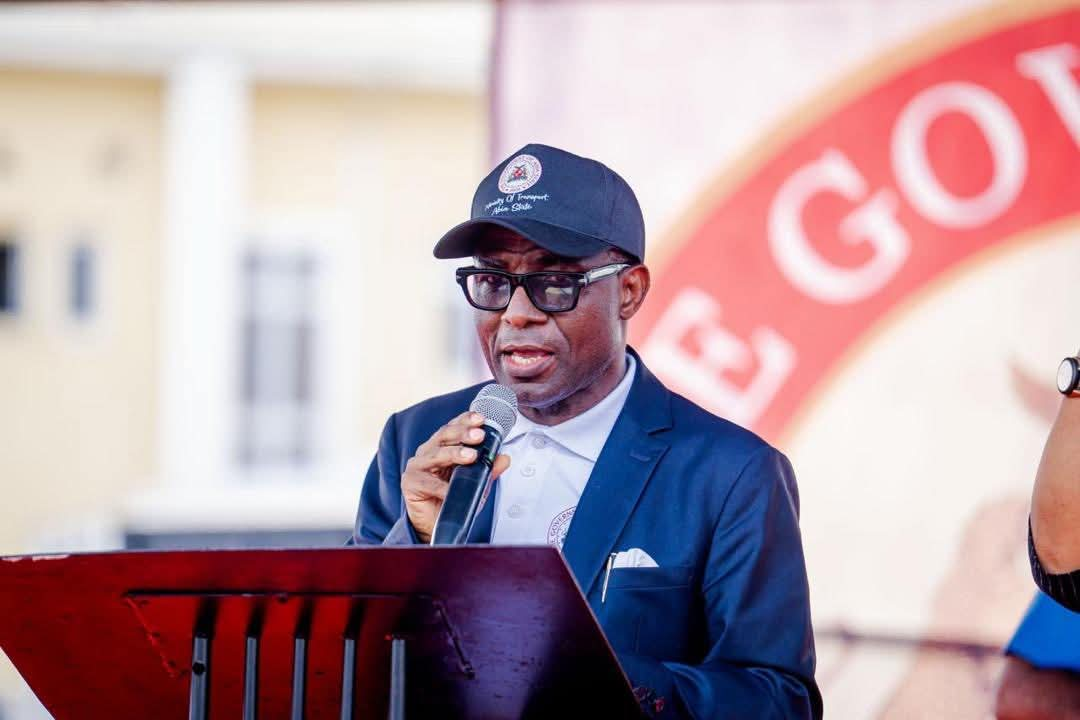
The Commissioner for Transport, Dr. Chimezie Isaac Ukaegbu, said the state is looking beyond government funding and is inviting credible partners from the United States, China, Europe, other African countries and the Abia diaspora to drive a transport transformation.
At the heart of the plan is a major push for electric mobility.
According to the compendium, Abia wants to expand its Green Shuttle Service and Urban Mass Transit Scheme, with opportunities for manufacturers to supply electric buses, financiers to provide fleet leasing, and energy firms to build charging stations, battery storage facilities and maintenance hubs.

Investors can also explore solar-powered charging, battery management, charging-as-a-service platforms, fleet management and technical training.
Priority locations for the expansion are Aba, Umuahia and other approved urban and intercity corridors.
Another flagship proposition is the Obeaku maritime and logistics initiative, designed to improve Abia’s access to international trade routes, cut logistics costs and boost the competitiveness of Aba’s manufacturing and commercial sectors.
Ukaegbu, however, was emphatic that the proposed Obeaku seaport is still at the project-development and feasibility-assessment stage.
He said it is not an approved or operational port, and detailed studies will still be required on navigability, hydrography, environment, land, engineering costs, cargo demand, financing and returns.
The project will also need relevant federal maritime and port approvals, as well as road and rail connections.
Potential components listed include port and marine infrastructure, cargo handling, inland logistics centres, warehousing, digital cargo management and marine engineering services.
The state is also seeking investors to build additional modern bus terminals and integrated transport hubs, building on the Nnenna Oti Bus Terminal in Umuahia.
The proposed terminals will feature waiting areas, commercial outlets, electronic ticketing, booking platforms, security systems, accessibility facilities, sanitation and digital passenger information.
Government is considering Build-Operate-Transfer, Design-Build-Finance-Operate-Maintain, management concessions and commercial leasing for developers.
In mass transit, private operators are being invited into urban bus services in Aba and Umuahia, intercity and regional passenger services, and corporate and institutional transport.
Prospective operators must show passenger demand, fare affordability, financial sustainability, insurance, maintenance capacity and compliance with safety regulations.
The compendium also highlights truck transit parks and freight logistics centres to support Aba’s trading and manufacturing economy.
Proposed facilities include secure truck parking, driver rest areas, repair workshops, warehouses, cargo consolidation centres, loading bays, digital tracking, security and emergency services.
The aim, according to the commissioner, is to reduce roadside truck parking, improve freight efficiency and enhance driver welfare.
Other openings include smart transportation and digital mobility — electronic ticketing, cashless payments, vehicle tracking, intelligent traffic management, digital licensing, transport data platforms and AI-driven route optimisation.
The state also wants computerised vehicle inspection centres with brake-testing, headlight, steering, wheel-alignment and emissions-testing facilities, as well as electric vehicle maintenance workshops, spare-parts distribution, diagnostic services and technical training academies.
On rail, Abia plans to work with federal authorities, neighbouring states and private developers to explore rail-linked freight terminals, inland logistics hubs, intermodal passenger facilities and improved access to rail infrastructure.
Ukaegbu said government is open to public-private partnerships, joint ventures, Build-Operate-Transfer, fleet leasing, vendor financing and development finance.
He also welcomed engagement with development finance institutions, infrastructure funds and climate-finance facilities, especially for electric mobility, renewable energy, transport safety and inclusive public transportation.
While US investors are being targeted for fleet-management technology, digital payments, transport data, logistics and infrastructure financing, Chinese manufacturers are invited for electric bus supply, charging equipment, battery storage, vehicle assembly and maintenance.
European investors are expected to explore sustainable urban mobility, transport safety, renewable energy integration and smart transport, while African operators can participate in regional passenger transport, freight services and warehousing.
Interested investors are to submit expressions of interest showing preferred projects, investment capacity, technical experience, proposed financing, implementation timelines and local employment plans.
Ukaegbu outlined a seven-stage facilitation process — expression of interest, preliminary assessment, technical and commercial evaluation, interagency consultation, project structuring, due diligence and approvals, and contracting and implementation.
He stressed that inclusion of any project in the compendium does not amount to final government approval, guarantee of contract award or exclusivity.
Project-specific feasibility studies, financial projections, capital requirements, concession terms and timelines will be established through due diligence and relevant government approvals.
He said government will prioritise commercially viable projects that deliver reasonable returns to investors while ensuring affordable and dependable services for residents.
The investment framework is expected to generate employment, strengthen local industries, improve passenger and freight transportation, promote environmental sustainability, enhance road safety and connect Abia businesses more effectively to regional and international markets.
The three-day AFRICANDO 2026, themed _”Deepening U.S.–Africa Commercial Ties in the Era of AfCFTA,”_ is expected to connect the state’s opportunities with international investors, manufacturers, development finance institutions and infrastructure developers.