WORLD NEWS
Otti: Abia Leveraging Technology To Drive Economic Growth, Create Jobs As UK launches SPRIRET initiative

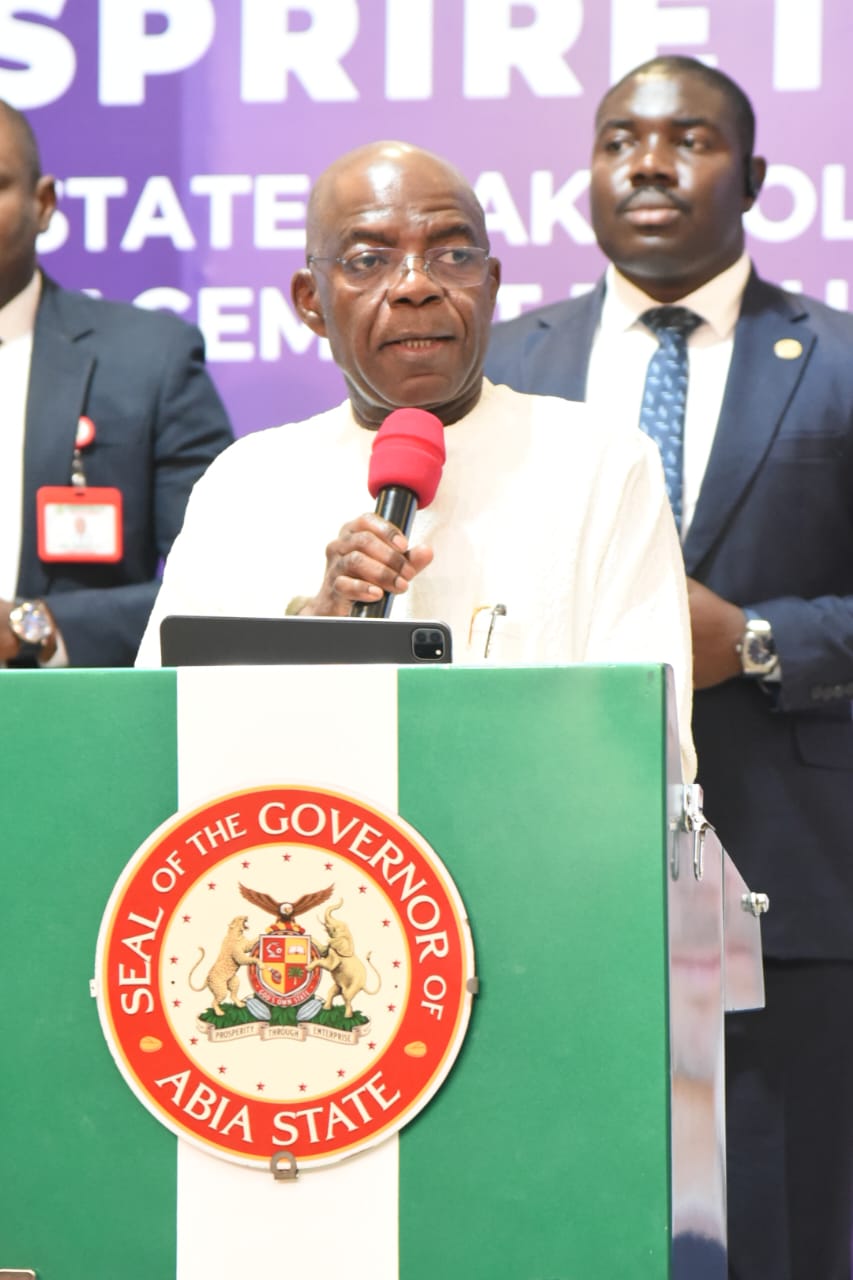
UMUAHIA — Abia State Governor, Alex Otti, has said his administration is committed to leveraging technology to drive economic development, create jobs, reduce administrative costs and improve efficiency in government.
Governor Otti stated this on Thursday while declaring open the stakeholder engagement on the State-Level Policy, Regulatory and Institutional Reforms Enabling Digital Transformation, SPIRIT, initiative in Umuahia.
He said technology has become an indispensable accelerator of development and a major driver of productivity in both public and private institutions, explaining that upon assumption of office, his administration made it clear that technology would be deployed extensively for social and economic benefits.
According to him, government established the Office of the Chief Information Officer as central channel for coordinating technology programmes, a step he said has contributed to growth of the technology ecosystem in the state.
The Governor disclosed that more than 2,202 young people have been trained in various in-demand ICT skills through the government-supported TechRise Skills Acquisition Programme, opening opportunities for beneficiaries in local and international employment, collaborations and new ventures.
He listed other initiatives including Thrive Abia, Abia Digital Government Upskill and Girls ICT programmes as efforts aimed at equipping citizens with skills to compete in the global business environment.
Otti acknowledged support of development partners, particularly the British Government, in advancing digital inclusion, and appreciated the British Deputy High Commissioner to Nigeria, Mr. Jonny Baxter, who spent two days in Abia visiting economic and social sites and identifying areas for partnership.
He recalled that in August 2024, Baxter’s predecessor, Dr. Richard Montgomery, attended graduation of the state-level inclusive digital transformation programme funded by UK’s Digital Access Programme, noting that 500 civil servants who participated are now playing significant roles in digital transformation across public sector.
The Governor said the stakeholder engagement was aimed at examining empirical findings and re-engineering technology regulatory architecture to reduce structural barriers and stimulate private-sector investment.
He explained that SPIRIT was established by the United Kingdom’s Foreign, Commonwealth and Development Office, FCDO, to support states in developing robust policy frameworks, resilient systems and institutions necessary for connected and accountable digital economies, and thanked FCDO for selecting Abia as one of the beneficiary states.
Otti said private-sector players, civil society and other stakeholders had embraced the initiative, adding that the state had laid important foundations, including the Abia State Dig Once Policy introduced in May 2024 to regulate installation of fibre-optic cables and underground infrastructure to protect investments and reduce costs for telcos and ISPs.
He also cited the Abia State Startup Law signed in October 2025 to stimulate technology-driven businesses through regulatory incentives and financial support, revealing that government established a two-billion-naira startup support fund and launched a 306-million-naira Technology Enabling Business Grant to support startups across 17 LGAs, with close to 100 businesses benefiting since May.
He said government’s vision of repositioning Abia as an ICT hub is gaining traction and progress in network densification has expanded mobile coverage and improved data access in previously underserved communities.
“The administration will measure progress by number of new investors attracted to Abia’s digital market, new employment opportunities created and contribution of digital economy to the state’s GDP,” Otti said.
Earlier, British Deputy High Commissioner to Nigeria, Mr. Jonny Baxter, said the United Kingdom values its partnership with Nigeria and is pleased to work with Abia to deliver the initiative, describing digital technology as powerful tool for improving public services, creating economic opportunities and enabling governments to better serve citizens.
Baxter said digital transformation requires collaboration and co-creation among private sector, civil society, academia and government to ensure interventions are locally owned and aligned with development priorities, noting similar engagements have been held in Ekiti, Niger and Anambra States.
He disclosed that UK has already supported about 450 civil servants to upgrade digital skills and is improving digital inclusion through community-owned sustainable connectivity hubs, one operational at Okporoenyi Community and another being established at Arochukwu.
“The digital economy contributed 18% to Nigeria’s GDP in 2024, but this could be much higher. Better infrastructure and a coherent policy environment are crucial,” Baxter stated, expressing hope that improved policies would attract greater investment from British companies and drive prosperity.
Baxter reaffirmed UK’s commitment to supporting Nigeria’s digital development and strengthening partnership with Abia to unlock opportunities for innovation, inclusion and sustainable economic growth.
Presenting a baseline report, the Chief Information Officer of the state, Mr. Gerald Ilukwe explained that Abia is one of five states benefiting from the intervention, which focuses on state-level policy, regulatory and institutional reforms for digital transformation.
According to him, the baseline study provides an honest assessment of the state’s current position and cuts across various aspects of the digital ecosystem, including industry, telecommunications, information technology, civil society, infrastructure, policy and service delivery.
He said although the present administration has worked extensively on physical infrastructure, there is also need to rebuild the “infrastructure of the human being” and the human mind, stressing that meaningful development in the 21st century cannot be achieved without developing skills and capacities of government workers and citizens.
According to him, the SPRIRET intervention has six output areas covering citizen accessibility, infrastructure, civic technology, policy frameworks and guidelines, as well as electronic waste management.